| Visual Med-Alpaca is an open-source, multi-modal foundation model designed specifically for the biomedical domain, built on the LLaMa-7B. With a few hours of instruct-tuning and plug-and-play visual modules, it can perform a range of tasks from reading radiological images and answering complex clinical questions, while being easily deployable and replicable with a single gaming GPU. |
Demo (insert GIF here) (Baian)
|
|
|
Please register for Hugging Face and fill out this form [link] to access the online demo of Visual Med-Alpaca. Warning: Only for academic usage and do not apply it to real clinical scenarios!
|
Overview
Domain-specific foundation models are extremely useful in the biomedical domain as biomedical text is highly specialized and contains many domain-specific terms and concepts that are not present in general domain text corpora such as Wikipedia and Books. Pre-training on large volumes of biomedical text has shown to improve the performance of language models on several biomedical text mining tasks when compared to existing publicly available biomedical PLMs.
However, to the best of our knowldege, there is not exisiting multimodal foundationmodel
Therefore, we develop the Visual Med-Alpaca,
Resources:
We apologize for the inconvenience, but this project is currently undergoing internal ethical screening at Cambridge University. We anticipate releasing the following assets within the next 1-2 weeks. You are more than welcome to Join Our Waitlist, and we'll notify you as soon as they become available.
- Data: Github, HuggingFace
- Code: Github
- Model: HuggingFace
- Demo: HuggingFace
Model Architecture and Training Recipe
Overview of the model architecture and training procedure.
Domain Adaptation: Self-Instruct in Biomedical Domain (Baian)
How to generate the instruct-tuning set
Visual Adaptation: Deplot and Medical VQA (Baian)
We also build a large-scale, high-quality video dataset, Vimeo90K. This dataset consists of 89,800 video clips downloaded from vimeo.com, which covers large variaty of scenes and actions. It is designed for the following four video processing tasks: temporal frame interpolation, video denoising, video deblocking, and video super-resolution.
Sampled Frames (Full-resolution samples are here):
The list of original videos
The list of all full-length original videos can be found here, and youtube-dl can be used to batch download them. We reused some of utilities by AoT Dataset for scene detection/camera stabilization to generate these video clips and please refer to this repository for more details.
We further process these 89,800 video clips to generate the following two subsets.
Triplet dataset (for temporal frame interpolation):
The triplet dataset consists of 73,171 3-frame sequences with a fixed resolution of 448 x 256, extracted from 15K selected video clips from Vimeo-90K. This dataset is designed for temporal frame interpolation. Download links are
- Testing set only (17GB): zip
- Both training and test set (33GB): zip
Septuplet dataset (for video denoising, deblocking, and super-resoluttion):
Notice: we have recently updated our testing denoising dataset to fix a bug in denoising test data generation. The new quantitative result of our algorithm is reported in our updated paper
The septuplet dataset consists of 91,701 7-frame sequences with fixed resolution 448 x 256, extracted from 39K selected video clips from Vimeo-90K. This dataset is designed to video denoising, deblocking, and super-resolution.
- The test set for video denoising (16GB): zip
- The test set for video deblocking (11GB): zip
- The test set for video super-resolution (6GB): zip
- The original test set (not downsampled or downgraded by noise) (15GB): zip
- The original training + test set (82GB): zip
Case Study
Input 1: What are the chemicals that treat hair loss?
Visual Med-Alpaca: There are several chemicals that can be used to treat hair loss, including:
1. Minoxidil: a medication that is applied to the scalp to promote hall growth.
2. Finasteride: a medication that is taken orally to slow down the production of dihydrotestosterone (DHT), a hormone that can cause hair loss.
3. Corticosteroids: topical medications that can be applied to the scalp to reduce inflammation and promote hair growth.
4. Anthralin: a medication that is applied to the scalp to promote hair growth by stimulating the production of blood cells that nourish the hair follicles.
5, Ketoconazole: a medication that is applied to the scalp to treat fungal infections that can cause hair loss.
It is important to consult with a healthcare professional before using any of these chemicals to treat hair loss, as they can have potential side effects and may not be suitable for everyone.
Alpaca-LoRA: The chemicals that treat hair loss include minoxidil, finasteride, and ketoconazole.
LLama-Adapter: Chemicals that treat hair loss include minoxidil, finasteride, and ketoconazole. Minoxidil is a topical solution that is applied directly to the scalp and is used to stimulate hair growth. Finasteride is a pill that is taken orally and is used to block the production of the hormone dihydrotestosterone, which can cause hair loss. Ketoconazole is an antifungal medication that is used to treat scalp infections that can cause hair loss.
ChatGPT (GPT-3.5-Turbo): There are several chemicals that are used to treat hair loss, including:
1. Minoxidil: This is an over-the-counter medication that is applied topically to the scalp. It works by increasing blood flow to the hair follicles, which can promote hair growth.
2. Finasteride: This is a prescription medication that is taken orally. It works by blocking the conversion of testosterone to dihydrotestosterone (DHT), which is a hormone that can cause hair loss.
3. Ketoconazole: This is an antifungal medication that is sometimes used to treat hair loss. It works by reducing inflammation and blocking the production of DHT.
4. Corticosteroids: These are anti-inflammatory medications that can be injected into the scalp. They are sometimes used to treat hair loss caused by autoimmune disorders or inflammation.
5. Spironolactone: This is a medication that is often used to treat high blood pressure, but it can also be effective in treating hair loss in women. It works by blocking the production of androgens, which can contribute to hair loss.
It's important to note that the effectiveness of these treatments can vary depending on the cause and severity of hair loss. It's best to consult with a healthcare provider or a dermatologist to determine the most appropriate treatment for you.
ChatGPT Plus (GPT-4): There are several chemicals that are used to treat hair loss, including:
1. Minoxidil: This is an over-the-counter medication that is applied topically to the scalp. It works by increasing blood flow to the hair follicles, which can promote hair growth.
2. Finasteride: This is a prescription medication that is taken orally. It works by blocking the conversion of testosterone to dihydrotestosterone (DHT), which is a hormone that can cause hair loss.
3. Ketoconazole: This is an antifungal medication that is sometimes used to treat hair loss. It works by reducing inflammation and blocking the production of DHT.
4. Corticosteroids: These are anti-inflammatory medications that can be injected into the scalp. They are sometimes used to treat hair loss caused by autoimmune disorders or inflammation.
5. Spironolactone: This is a medication that is often used to treat high blood pressure, but it can also be effective in treating hair loss in women. It works by blocking the production of androgens, which can contribute to hair loss.
It's important to note that the effectiveness of these treatments can vary depending on the cause and severity of hair loss. It's best to consult with a healthcare provider or a dermatologist to determine the most appropriate treatment for you.
Input 2: Is absorbance related to number of cells?
Image: 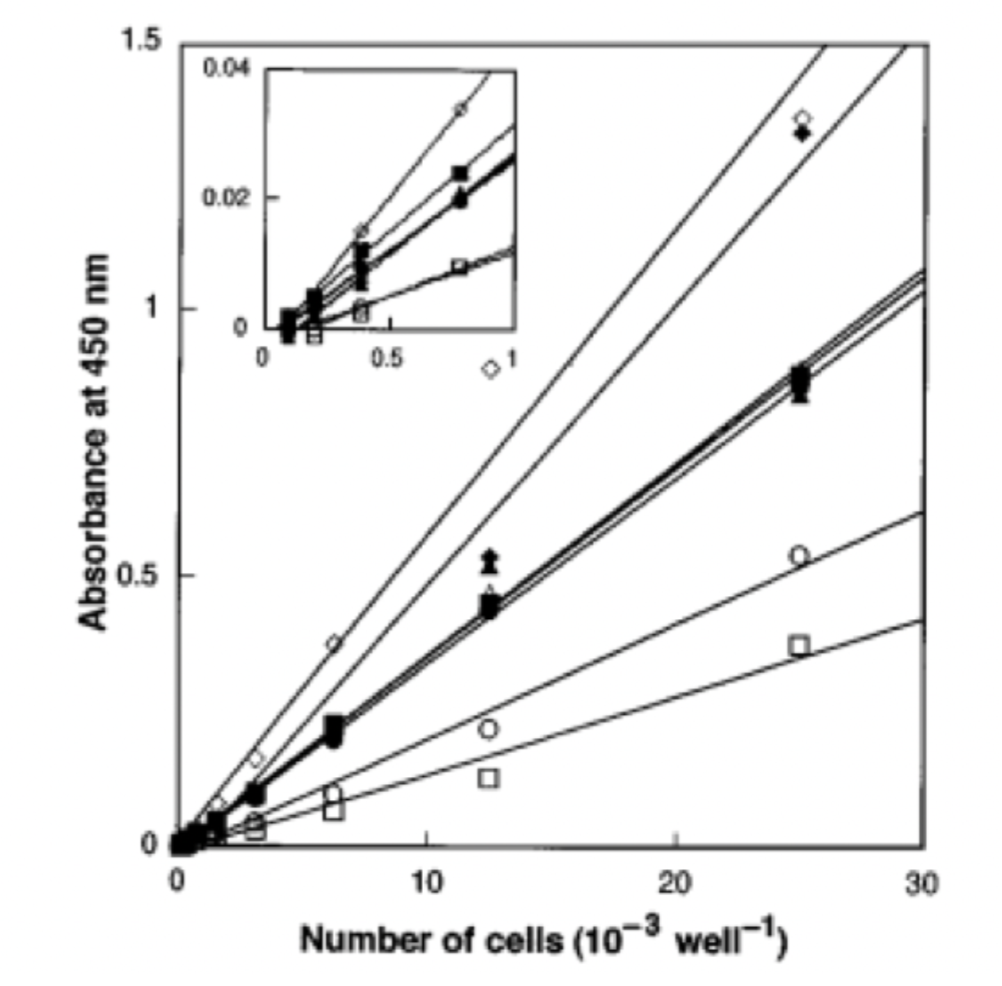
Visual Med-Alpaca: Yes, absorbance is related to the number of cells. Absorbance is a measure of the amount of light that is absorbed by a solution, and it is directly proportional to the concentration of the absorbing substance in the solution ln this case the absorbance is being measured at a wavelength of 450 nm which is a common wavelength for measuring the absorbance of nucleic acids such as DNA or RNA. The absorbance value(D) can be calculated using the Beer-lambert law which states that the absorbance is proportional to the log of the concentration of the absorbing substance, Therefore the absorbance value can be used to estimate the number of cells in the sample based on the known concentration of the cells and the absorbance value.
ChatGPT Plus (GPT-4):
Input 2: What is seen in the X-ray and what should be done?
Image: 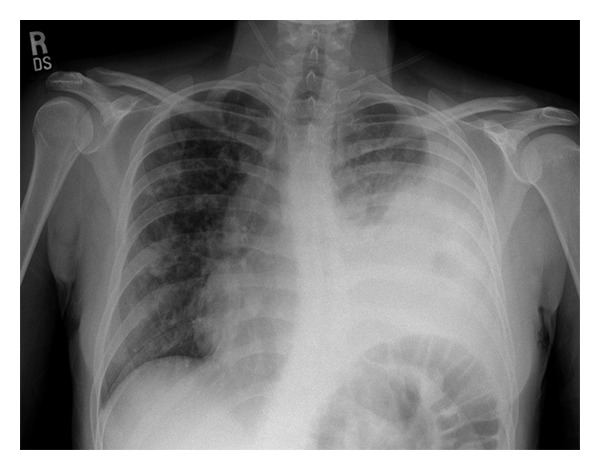
Visual Med-Alpaca: Bilateral infiltrates and bilateral pleural effusion seen in a chest x-ray may indicate a respiratory infection or other respiratory conditions such as pneumonia pulmonary edema, or pleural effusion, it is important to consult a medical professional for a proper diagnosis and treatment plan.
ChatGPT Plus (GPT-4):
Future Work
Compare with ChatGPT / Alpaca / Galactica
Implementation Details
Hyper-parameters:
Hardware Requirement:
Limitations
Visual Med-Alpaca, is intended for academic research purposes only. Any commercial or clinical use of the model is strictly prohibited. This decision is based on the License Agreement inherited from LLaMA, on which the model is built. Additionally, Visual Med-Alpaca is not legally approved for medical use in any country. Users should be aware of the model's limitations in terms of medical knowledge and the possibility of misinformation. Therefore, any reliance on Visual Med-Alpaca for medical decision-making is at the user's own risk.
Note: The developers and owners of the model, the Language Technology Lab at Cambridge University, do not assume any liability for the accuracy or completeness of the information provided by Visual Med-Alpaca, nor will they be responsible for any potential harm caused by the misuse of the model.
|